


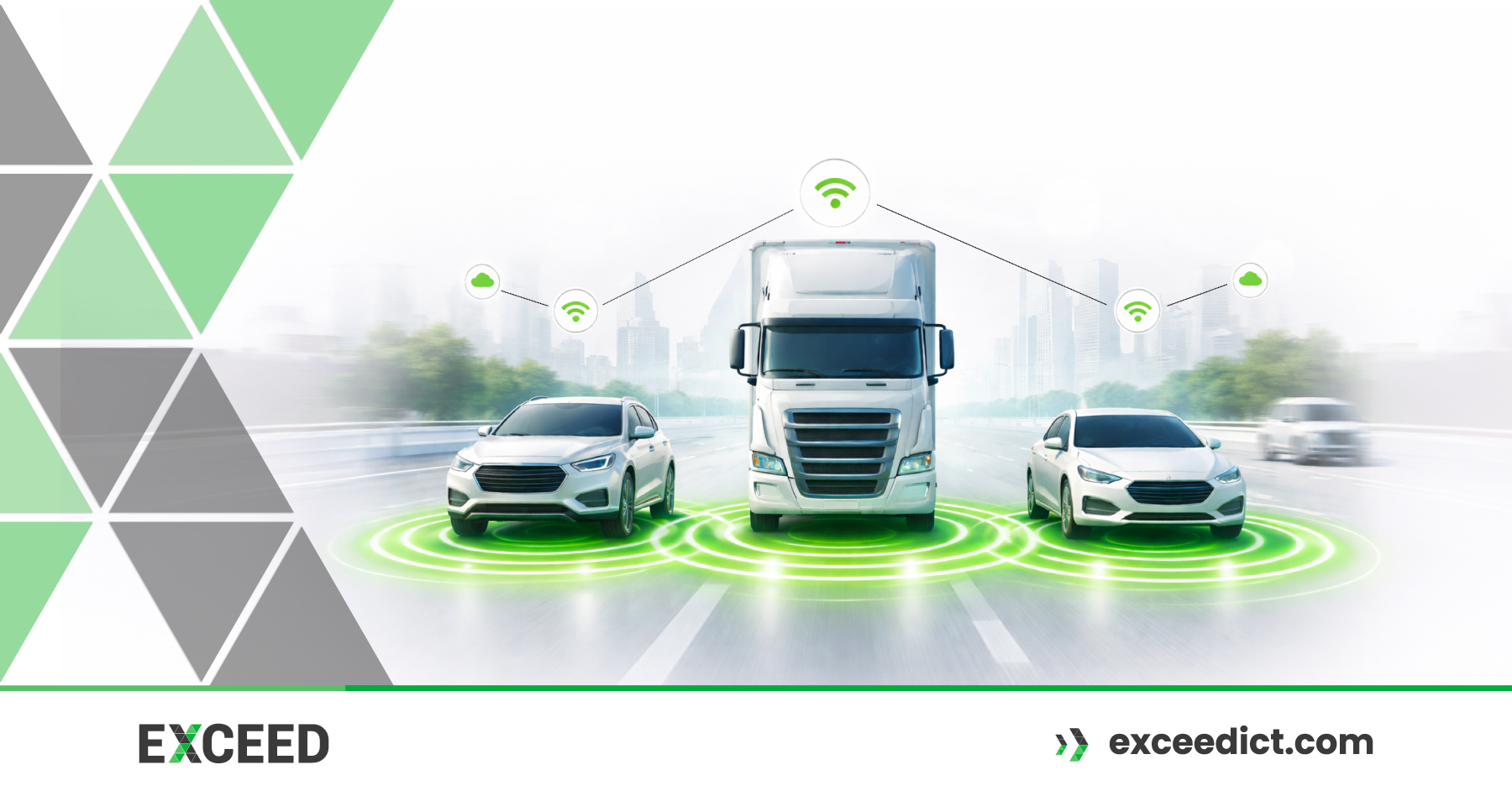
Connected vehicles are rapidly transforming the way Australians travel, work, and manage transport systems. With over a million connected cars already on the road and the majority of new vehicles expected to adopt this technology in the coming years, the shift towards smarter mobility is well underway.
By integrating internet connectivity, sensors, and advanced communication systems, connected vehicles are improving road safety, enhancing driver convenience, and enabling more efficient traffic management across Australia.
What Is a Connected Vehicle?
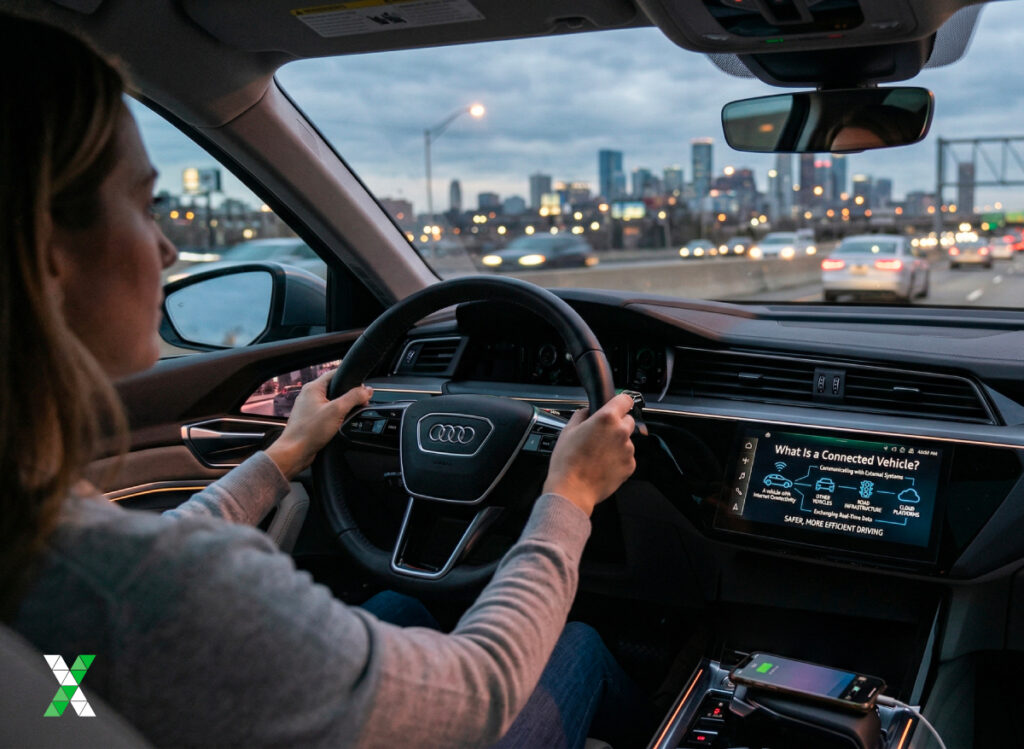 A connected vehicle is any car, truck, or bus equipped with internet connectivity that allows it to communicate with external systems such as other vehicles, road infrastructure, and cloud platforms.
This connectivity is typically achieved through an embedded SIM card within the vehicle or by linking to a smartphone. As a result, connected vehicles can exchange real-time data, making them far more intelligent than traditional vehicles.
Often described as “computers on wheels,” these vehicles are designed to provide a safer, more efficient, and more connected driving experience.
How Connected Vehicles Work?
Connected vehicles operate by collecting and transmitting data through a network of sensors, GPS systems, and onboard computers. This data is shared in real time using mobile networks such as 4G and 5G.
The communication system is commonly referred to as V2X (Vehicle-to-Everything), which enables vehicles to interact with their surroundings, including other vehicles, infrastructure, pedestrians, and cloud services.
This constant flow of information allows vehicles to detect hazards, optimise routes, and deliver timely alerts to drivers.
Types of Connectivity in Connected Vehicles (V2X)
V2V (Vehicle-to-Vehicle)
Vehicles share data such as speed, direction, and braking to help prevent collisions and improve road safety.
V2I (Vehicle-to-Infrastructure)
Vehicles communicate with traffic lights, road signs, and other infrastructure to receive updates on traffic conditions, roadworks, or hazards.
V2C (Vehicle-to-Cloud)
Data is transmitted to cloud platforms for over-the-air updates, remote diagnostics, and predictive maintenance.
V2P (Vehicle-to-Pedestrian)
Sensors detect nearby pedestrians and cyclists, providing alerts to reduce the risk of accidents.
V2G (Vehicle-to-Grid)
Electric vehicles can interact with the energy grid, potentially supplying power back during peak demand periods.
Key Technologies Behind Connected Vehicles
Several advanced technologies power connected vehicles:
- Internet of Things (IoT): Enables communication between devices and systems
- 4G/5G Networks: Provide fast and reliable data transmission
- GPS Tracking: Supports navigation and real-time location services
- Telematics Systems: Monitor vehicle performance and driver behaviour
- Artificial Intelligence (AI): Enhances decision-making and predictive capabilities
Together, these technologies create a seamless and intelligent driving experience.
Key Features of Connected Vehicles
Modern connected vehicles offer a wide range of features designed to improve convenience and safety:
- Remote access via mobile apps (lock/unlock, start engine, track location)
- Real-time traffic updates and navigation
- In-car Wi-Fi and entertainment systems
- Vehicle diagnostics and maintenance alerts
- Over-the-air software updates
These features provide drivers with greater control and a more personalised driving experience.
Benefits of Connected Vehicles in Australia
Improved Road Safety
Connected vehicles can alert drivers to hazards, sudden braking, or dangerous road conditions, helping to reduce accidents.
Better Traffic Efficiency
Real-time traffic data allows for smarter routing, reducing congestion and travel time.
Enhanced Convenience
Drivers can remotely manage their vehicles and access a range of digital services from their smartphones.
Fleet and Business Advantages
Businesses benefit from real-time tracking, route optimisation, and improved operational efficiency, leading to cost savings.
Connected Vehicle Initiatives in Australia
Australia is actively investing in connected vehicle technology through trials and pilot programs, such as the Ipswich Connected Vehicle Pilot in Queensland.
These initiatives aim to test real-world applications of V2X technology and prepare for widespread adoption of connected transport systems across the country.
Privacy and Cybersecurity Considerations
While connected vehicles offer many benefits, they also raise important privacy and security concerns.
Vehicles can collect and transmit data such as location, driving habits, and device information. As internet-enabled systems, they are also potential targets for cyberattacks.
To address these risks, organisations must implement strong cybersecurity measures, and drivers should remain aware of how their data is used and protected.
Connected Vehicles vs Autonomous Vehicles
Connected vehicles and autonomous vehicles are often confused, but they serve different purposes.
Connected vehicles focus on communication and data sharing to assist drivers, while autonomous vehicles are designed to operate without human input.
Connectivity plays a crucial role in enabling future autonomous driving technologies.
Connected Vehicle Solutions by Exceed ICT
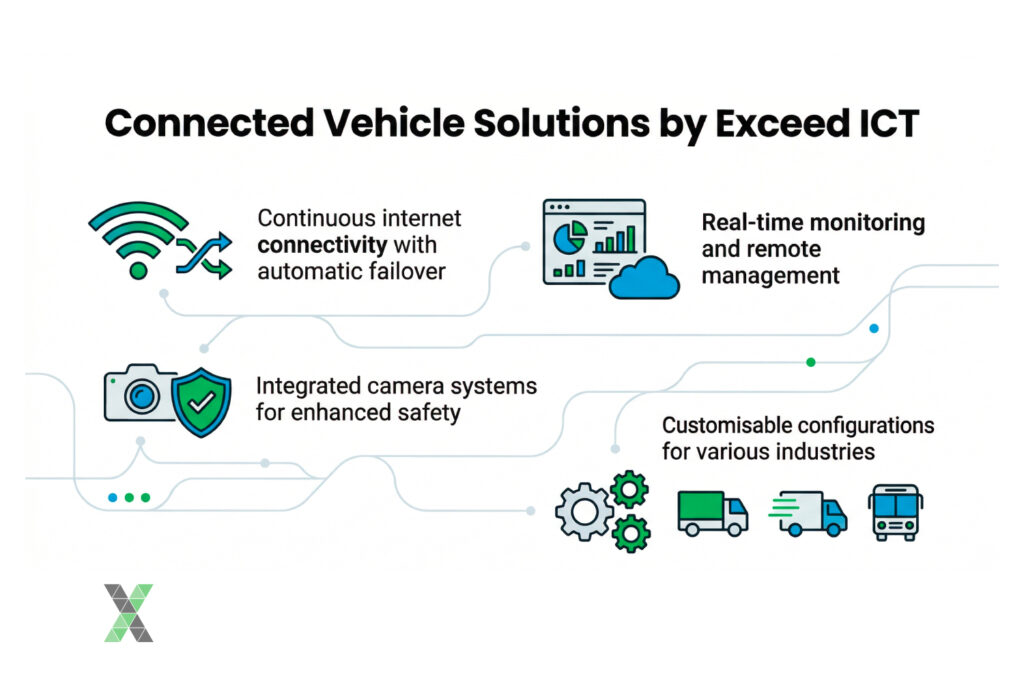 Exceed ICT offers advanced connected vehicle solutions designed for modern mobility needs. Its Intelligent Vehicle Access (IVA) system delivers seamless connectivity through 4G/5G networks with satellite backup, ensuring reliable performance even in remote areas.
Key features include:
- Continuous internet connectivity with automatic failover
- Real-time monitoring and remote management
- Integrated camera systems for enhanced safety
- Customisable configurations for various industries
These solutions are ideal for emergency services, remote field teams, and organisations requiring reliable connectivity on the move.
The Future of Connected Vehicles in Australia
The future of connected vehicles in Australia looks promising, with continued advancements in 5G, IoT, and artificial intelligence.
As smart city initiatives expand and more vehicles become connected, we can expect improved road safety, greater efficiency, and enhanced mobility solutions. Connected vehicles will play a key role in shaping the future of transport across Australia.
Conclusion
Connected vehicles are revolutionising transport in Australia by combining advanced technology with real-time communication. From improving safety to enhancing convenience and efficiency, these vehicles are paving the way for smarter mobility.
As adoption continues to grow, connected vehicle technology will become an essential part of everyday transport, supporting safer roads and more connected communities.
Call us on 1300 832 639 or simply search “Exceed ICT” on Google Maps to find a location near you and connect with our team today.
We also provide
Telecoms Expense Management, Device Deployment, Mobile Fleet management, Telstra mobility Managed Services.
Improve Business Core values, Business Consulting, Network Management, Telstra Expense Management and many more Services.
FAQs
What is a connected vehicle?
A connected vehicle is a vehicle equipped with internet connectivity that allows it to communicate with other systems and devices.
How do connected vehicles work?
They use sensors, GPS, and mobile networks to share real-time data through V2X communication.
What are the benefits of connected vehicles?
Improved safety, better traffic management, enhanced convenience, and cost savings for businesses.
Are connected vehicles safe?
Yes, but they require strong cybersecurity measures to protect data and systems.
What is V2X technology?
V2X stands for Vehicle-to-Everything, enabling communication between vehicles, infrastructure, pedestrians, and cloud systems.